
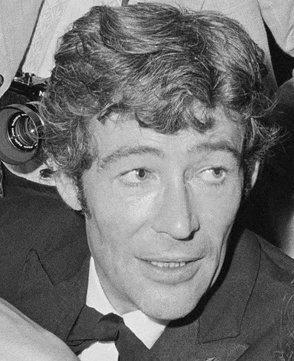
In the glittering pantheon of Hollywood legends, one man’s shadow looms larger than most—yet his greatest achievement might also be his most haunting burden. Peter O’Toole holds a record that no actor would ever want: eight Academy Award nominations for acting without a single win. But behind those losses lies a story far more complex than simple bad luck, one that reveals the tormented soul of a man who could become anyone on screen except, perhaps, himself.
The whispers started in the industry’s smoke-filled rooms decades ago. What really happened behind the scenes during those eight Oscar ceremonies? What did O’Toole know that we didn’t? And why, when Hollywood finally offered him an honorary award in 2002, did his response send shockwaves through the Academy?
The Desert Phoenix Who Conquered Lawrence and London
The year was 1962, and director David Lean was gambling everything on an unknown Irish-English actor with piercing blue eyes and a voice that could command armies. When Peter O’Toole emerged from the Arabian desert as T.E. Lawrence in “Lawrence of Arabia,” he didn’t just step into stardom—he exploded into it like a supernova across cinema’s night sky.
Born into modest circumstances, O’Toole had honed his craft at the Royal Academy of Dramatic Art and the hallowed stages of the Bristol Old Vic. His Shakespearean training gave him an almost otherworldly presence, a magnetic pull that made audiences lean forward in their seats. By 1963, he was commanding the National Theatre’s stage as Hamlet, the role every serious actor dreams of mastering.
But it was Lawrence that changed everything. That first Oscar nomination in 1963 should have been a triumph. Instead, it became the beginning of a pattern that would define—and perhaps haunt—his entire career. The cameras caught his gracious smile at the ceremony, but those who knew him whispered about what they saw in his eyes when Gregory Peck’s name was called instead.
The Magnificent Contradiction: Saint and Sinner in One Frame
O’Toole possessed a rare alchemy that few actors ever achieve—the ability to be simultaneously regal and rebellious, noble and dangerous. Whether portraying the tormented King Henry II in both “Becket” and “The Lion in Winter” or the deliriously unhinged aristocrat in “The Ruling Class,” he brought a manic intensity that felt both controlled and barely contained.
Off-stage, he was known as a “hellraiser,” a label that followed him like a shadow through London’s pubs and Hollywood’s parties. Yet this wasn’t mere celebrity excess—it was the release valve for a man whose artistic perfectionism bordered on the obsessive. Those who worked with him spoke of marathon preparation sessions, of an actor who would disappear so completely into his roles that colleagues worried he might not find his way back.
His voice alone became legendary—that crystalline English diction that could slice through silence or caress audiences into submission. When he voiced the restaurant critic Anton Ego in Pixar’s “Ratatouille,” even animated form couldn’t diminish his commanding presence. Television audiences saw glimpses of his range too, from his Emmy-winning turn as Bishop Pierre Cauchon in “Joan of Arc” to his chilling portrayal of Paul von Hindenburg in “Hitler: The Rise of Evil.”
The Academy’s Greatest Mystery: Eight Times a Bridesmaid
Here lies the heart of Peter O’Toole’s enigma. Eight times he was nominated for acting’s highest honor. Eight times he walked away empty-handed. “Becket,” “The Lion in Winter,” “Goodbye, Mr. Chips,” “The Ruling Class,” “The Stunt Man,” “My Favorite Year,” “Venus”—each nomination represented not just a performance but a piece of his soul laid bare before the Academy voters.
Industry insiders began to whisper. Was it his reputation as a hellraiser that cost him votes? Was there something deeper—a resistance within Hollywood’s establishment to honoring a man who seemed to live by his own rules? The pattern became so pronounced that bookmakers stopped taking bets on O’Toole wins.
Then came 2002, and the Academy’s attempt at redemption: an Honorary Award for his career achievements. But O’Toole’s response wasn’t the gracious acceptance Hollywood expected. The man who had spent four decades chasing Oscar gold reportedly considered declining the honor, suggesting he was “still in the game” and preferred to compete for the real thing. The Academy had offered him consolation; he wanted vindication.
What was it about those eight losses that cut so deep? What did O’Toole understand about his relationship with Hollywood that the rest of us could only guess at?
The Eternal Enigma: A Legend Who Remains Just Out of Reach
Peter O’Toole ultimately accepted that Honorary Award, but the gesture felt more like an acknowledgment of distance than an embrace. He had become cinema’s magnificent outsider—celebrated, revered, yet somehow forever separate from the industry’s inner circle.
His later years saw him taking on unexpected roles, from ancient warriors in “Troy” to eccentric eccentrics in “Dean Spanley,” each performance a reminder that the fire still burned within. When he finally retired from acting, it wasn’t with fanfare but with typical O’Toole mystique—a quiet step back from the spotlight he had commanded for over five decades.
Today, that record remains unbroken: eight nominations, zero wins. But perhaps that’s fitting for a man who always seemed to exist in the spaces between certainty and mystery, between triumph and tragedy. In losing those eight Oscars, Peter O’Toole may have won something far more elusive—the eternal fascination of audiences who still wonder what secrets lie behind those piercing blue eyes, and what truths he took with him when the final curtain fell.
The golden statues gather dust on other shelves, but the questions remain: What did Hollywood never quite understand about Peter O’Toole? And what did he know about the game that the rest of us are still trying to figure out?
Photos via Wikimedia Commons (public domain / Creative Commons).