
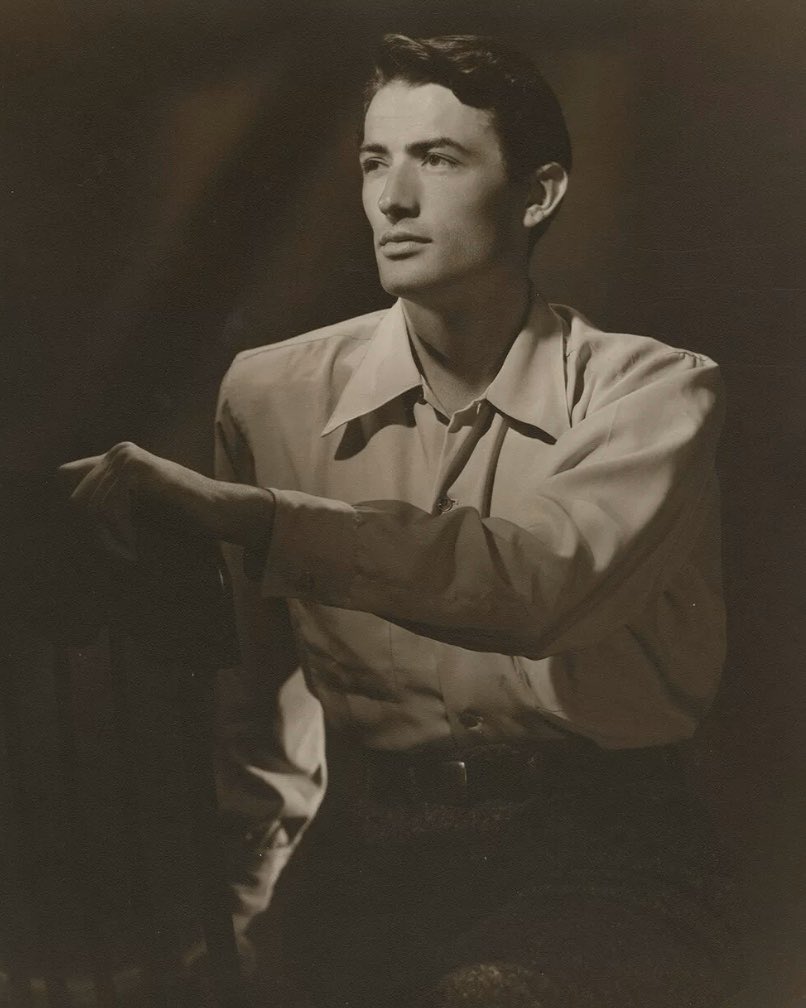
In the golden age of Hollywood, when stars were manufactured like dreams and sold like salvation, one man stood apart. Gregory Peck carried himself with the bearing of a statue come to life, his steel-gray eyes holding secrets that would both elevate him to legendary status and burden him with expectations no mortal man should bear. But behind the towering frame and that voice like distant thunder, what shadows lurked in the corners of America’s most trusted leading man?
From Theater Dreams to Silver Screen Destiny
The transformation from Eldred Gregory Peck to simply “Gregory Peck” began in the hallowed halls of the Neighborhood Playhouse, where Sanford Meisner’s revolutionary acting method would forge the foundation of a legend. More than 50 stage productions became his training ground, each performance carving away the rough edges of a young man destined for greatness.
The breakthrough arrived like lightning in 1944 with *The Keys of the Kingdom*, John M. Stahl’s drama that introduced audiences to a new kind of leading man. This wasn’t just another handsome face—this was gravitas incarnate, earning Peck his first Academy Award nomination and announcing the arrival of Hollywood’s new moral center.
The late 1940s painted a canvas of both triumph and tribulation. While *The Valley of Decision*, Hitchcock’s mind-bending *Spellbound*, and the family-friendly *The Yearling* showcased his remarkable range, the lukewarm reception of *The Paradine Case* and *The Great Sinner* hinted at the pressures mounting behind that stoic facade.
The Icon Who Bore America’s Conscience
By the 1950s, Gregory Peck had become more than an actor—he was America’s cinematic conscience, a towering figure whose very presence on screen suggested that goodness could prevail in an increasingly complex world. The back-to-back triumphs of *Captain Horatio Hornblower* and the biblical epic *David and Bathsheba* established him as Hollywood royalty.
His collaborations read like a who’s who of cinematic legends: the smoldering chemistry with Ava Gardner in *The Snows of Kilimanjaro*, the magical pairing with Audrey Hepburn in *Roman Holiday*. Each role seemed chosen not just for entertainment, but for the moral weight it could carry on those impossibly broad shoulders.
From the obsessive pursuit of the white whale in *Moby Dick* to the wartime heroics of *The Guns of Navarone*, from the chilling psychological thriller *Cape Fear* to the supernatural terror of *The Omen* and the Nazi-hunting drama *The Boys from Brazil*, Peck selected roles that challenged both his craft and his audience’s expectations. Throughout it all, he portrayed protagonists with what critics called “moral fiber”—a quality that seemed to emanate from the man himself.
The Weight of Righteousness: When Heroes Face Their Demons
But here’s what the studio publicity machines never revealed: being America’s moral compass came with a price that would have crushed lesser men. When Peck took on *Gentleman’s Agreement*, tackling the explosive topic of antisemitism, he wasn’t just playing a role—he was stepping into a minefield that would define his off-screen persona forever.
The role that would both crown and burden him arrived in 1962: Atticus Finch in *To Kill a Mockingbird*. The Academy Award for Best Actor was just the beginning. This performance, dealing with racial inequality in the American South, transformed Peck from movie star to cultural symbol. But the weight of embodying such unshakeable moral authority on screen began to blur the lines between character and man.
The pressure intensified when he portrayed military leadership and post-traumatic stress disorder in *Twelve O’Clock High*, and later when he embodied Catholic priest Hugh O’Flaherty in *The Scarlet and The Black*, a man who saved thousands of Allied POWs and Jewish people during World War II. Each role demanded not just acting prowess, but moral conviction that audiences believed extended far beyond the silver screen.
Behind the scenes, Peck’s political courage was as formidable as his screen presence. In 1947, he challenged the House Un-American Activities Committee—a move that branded him as a political opponent in the eyes of Richard Nixon. This wasn’t just career risk; it was moral imperative made manifest, the same quality that would earn him the Presidential Medal of Freedom from Lyndon B. Johnson in 1969.
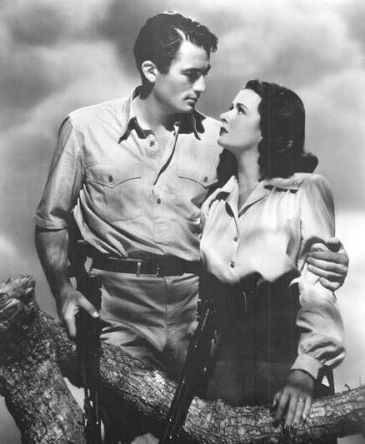
The Eternal Mystery of Moral Perfection
When Gregory Peck died peacefully in his sleep from bronchopneumonia at age 87, the American Film Institute had already enshrined him as the 12th-greatest male star of Classic Hollywood Cinema. But numbers cannot capture the true mystery of this man: how does someone carry the weight of an entire nation’s moral expectations and emerge with dignity intact?
Perhaps the secret lies not in the perfection audiences saw, but in the humanity he never fully revealed. Behind those penetrating eyes and that commanding presence lived a man who understood that true heroism isn’t the absence of struggle, but the choice to keep fighting for what’s right, even when the cameras stop rolling and the applause fades to silence.
In a world where heroes are manufactured and discarded with alarming frequency, Gregory Peck remains an enigma—a reminder that some mysteries are best left unsolved, some legends better left intact, and some men destined to carry our hopes long after they’ve taken their final bow.
Photos via Wikimedia Commons (public domain / Creative Commons).