
Brigitte Bardot was barely eighteen years old when director Roger Vadim cast her in her first significant film role, a decision that launched not just her own career but an entirely new era of French cinema.
The role almost went to someone else entirely, and had it, the trajectory of European film in the 1950s and 1960s might have looked very different.

A Young Model Discovered Early
Bardot began modeling as a young teenager, appearing on the cover of Elle magazine at just fifteen years old. It was through this modeling work that she first came to the attention of the French film industry, including a young assistant director named Roger Vadim.
Vadim, who would later marry Bardot, spent years developing a project specifically intended to showcase her, eventually resulting in the 1956 film And God Created Woman.
A Film That Shocked and Captivated
The film’s frank depiction of sexuality was considered daring, even scandalous, for its time, and it became an unexpected international sensation, particularly in the United States, where it introduced American audiences to both Bardot and a new wave of French cinema.
Bardot’s performance made her an overnight international star, launching a career that would span more than four decades in film.
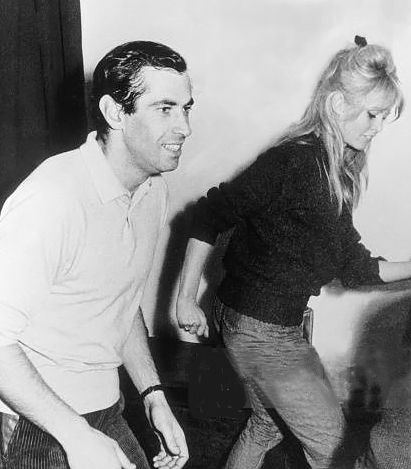
A Symbol Bigger Than the Screen
Bardot quickly became a defining cultural symbol of postwar France, credited with helping popularize the bikini internationally and influencing fashion trends across Europe and America throughout the late 1950s and 1960s.
Her image became so culturally significant that a bust modeled after her likeness was later used as the official representation of Marianne, the national symbol of France itself.
From an Unknown Teenager to a National Icon
What began as a modeling assignment and a young director’s ambitious personal project transformed a teenager into one of the most influential cultural figures France produced in the twentieth century.
Decades later, Bardot remains one of the clearest examples of how a single early film role can permanently reshape both a career and an entire national culture’s aesthetic.
Photos via Wikimedia Commons (public domain / Creative Commons).