
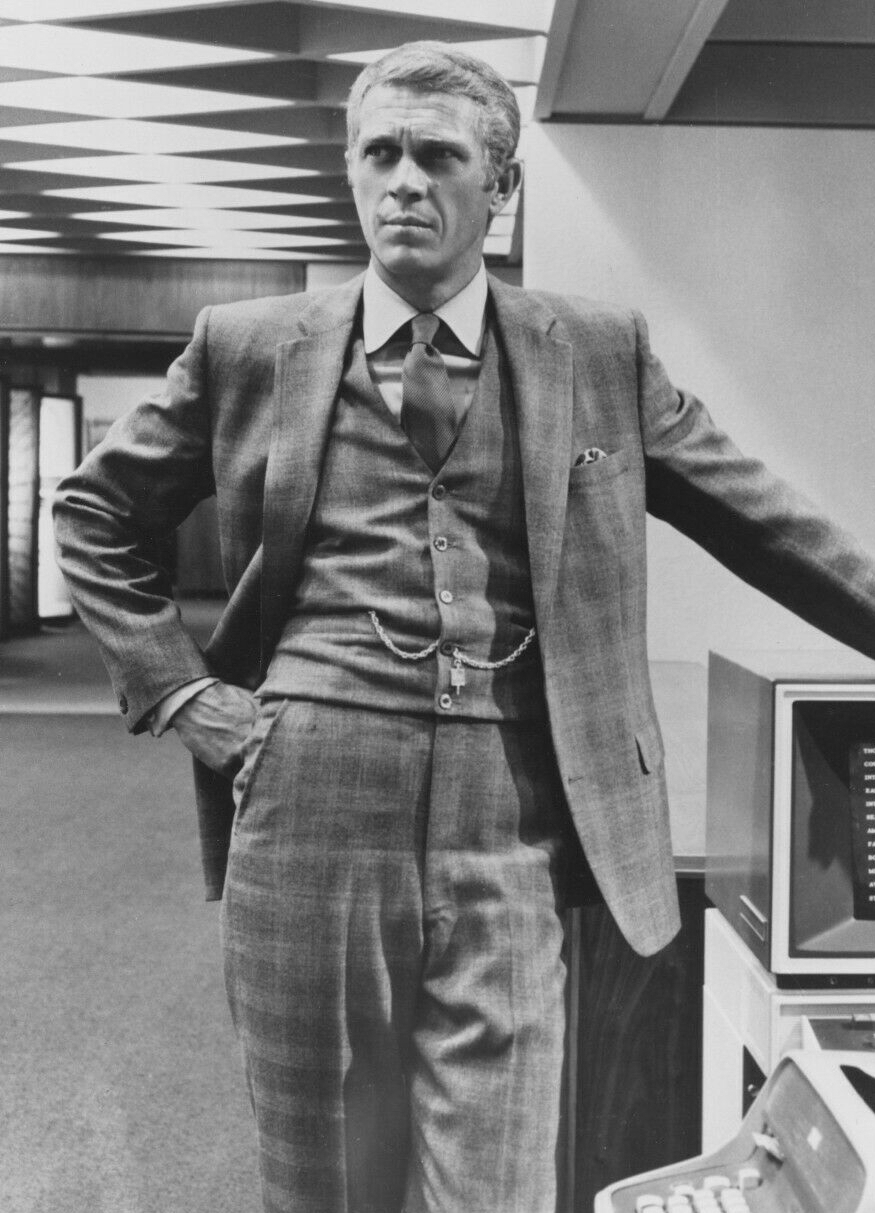
In the autumn of 1980, the world’s most famous action hero made a choice that would shock Hollywood to its core. Steve McQueen—the man who had outrun cars, escaped Nazi prisons on screen, and commanded the highest salary in cinema—was about to embark on his most dangerous mission yet. But this time, the cameras weren’t rolling, and the stakes were life and death. What drove the “King of Cool” to defy his doctors, abandon his country, and check into a foreign hospital under a false name?
The answer lies buried in a tale of desperation, defiance, and the tragic irony of a man who spent his career cheating death on screen, only to face his greatest enemy off it.
The Antihero Who Conquered Hollywood’s Golden Age
In an era when leading men were expected to be clean-cut and wholesome, Terrence Stephen McQueen rewrote the rules of stardom with a cigarette dangling from his lips and rebellion burning in his piercing blue eyes. Rising from humble beginnings to become Hollywood royalty, McQueen embodied everything the 1960s counterculture craved—raw authenticity, quiet strength, and an almost magnetic disdain for authority.
His breakthrough came with films that would define a generation. *The Blob* introduced audiences to his magnetic screen presence, but it was *The Magnificent Seven* that truly announced his arrival. When he joined the ensemble cast of gunslingers, something electric happened—McQueen didn’t just act alongside legends like Yul Brynner, he stood toe-to-toe with them, stealing scenes with nothing more than a sideways glance or a perfectly timed pause.
*The Great Escape* cemented his legend, earning him a Moscow International Film Festival Award and a Laurel Award nomination. That iconic motorcycle chase wasn’t just cinema—it was pure McQueen, the man who lived for speed, danger, and the thrill of pushing boundaries. The film captured something primal about the American spirit, and McQueen became its flesh-and-blood embodiment.
*Bullitt* delivered perhaps the most famous car chase in cinema history, with McQueen behind the wheel of that unforgettable green Mustang. *The Thomas Crown Affair*, *Nevada Smith*, *The Cincinnati Kid*—each role added another layer to his mystique. By 1974, he had achieved what seemed impossible: he became the world’s highest-paid movie star, commanding salaries that made executives wince and audiences cheer.

The Man Behind the Legend: Harvey Mushman and the Need for Speed
But who was Steve McQueen when the cameras stopped rolling? The answer reveals a man as complex and contradictory as any character he ever portrayed on screen. By day, he was the “King of Cool,” the actor whose antihero persona perfectly captured the zeitgeist of an America questioning everything it once held sacred. By night, he transformed into “Harvey Mushman”—his racing alias that allowed him to pursue his greatest passion away from the glare of Hollywood spotlights.
McQueen wasn’t just playing tough guys; he was living the life of one. His love affair with motorcycles and cars wasn’t a Hollywood affectation—it was bone-deep obsession. Under his pseudonym, he would race with a fury and focus that matched his on-screen intensity, seeking something that even his massive fame couldn’t provide: the pure, unfiltered rush of man against machine against time.
His relationships with directors and producers were legendary for all the wrong reasons. McQueen was combative, demanding, and utterly uncompromising when it came to his craft. Yet his popularity was so immense, his box office draw so undeniable, that Hollywood bent to his will. He negotiated the largest salaries in the industry not through charm or politics, but through sheer star power that couldn’t be manufactured or replicated.
From *The Getaway* to *Papillon* to the disaster epic *The Towering Inferno*, McQueen chose projects that fed his image as the ultimate survivor, the man who could outwit any system and escape any trap. His role in *The Sand Pebbles* even earned him Academy Award, Golden Globe, and Laurel Award nominations, proving he could handle dramatic weight with the same effortless cool he brought to action sequences.
The Final Act: When the King of Cool Faced His Cruelest Enemy
Then came 1974, and with it, a mystery that would haunt Hollywood for decades. At the pinnacle of his career, commanding unprecedented salaries and wielding enormous influence, Steve McQueen simply… vanished from the screen. For four years, the man who had been cinema’s most bankable star didn’t appear in a single film. What could make the King of Cool abandon his throne at the height of his power?
The truth, when it finally emerged, was more devastating than any script he’d ever been offered. McQueen had been diagnosed with terminal cancer—the one enemy he couldn’t outrun, couldn’t escape, couldn’t defeat with sheer will and raw determination. The disease was eating away at the very man who had made a career of being indestructible.
But even facing death, McQueen refused to surrender. When American doctors delivered their verdict—the cancer was inoperable, his heart too weak for surgery—McQueen made a decision that would define his final chapter. In October 1980, he flew to Mexico, turning his back on everything conventional medicine had told him. It was the ultimate act of rebellion from a man who had spent his entire career defying authority.
In Ciudad Juárez, he checked into a hospital under a fake name, one last transformation for an actor who had become a master of reinvention. The hospital staff had no idea they were operating on one of the most famous men in the world. They saw only a desperately ill patient willing to risk everything for one final chance at life.

The Mystery That Lingers: A Legend’s Last Gamble
On a quiet hospital bed in Mexico, just hours after his surgery, Steve McQueen’s heart finally stopped. He was fifty years old, the same age when many actors are just hitting their stride. The man who had cheated death countless times on screen had lost his final, most important role—the fight for his own life.
The irony cuts deep and lingers still. Here was an actor whose greatest performances involved escaping impossible situations, yet he couldn’t escape the trap of his own mortality. The King of Cool, who had mastered every vehicle from motorcycles to Mustangs, had been outpaced by time itself.
But perhaps there’s something fitting about McQueen’s final act of defiance. Even facing the ultimate enemy, he refused to play by anyone else’s rules. He chose hope over resignation, action over acceptance, rebellion over surrender. In the end, he remained true to every antihero he’d ever portrayed—flawed, stubborn, magnificent in his refusal to go gentle into that good night.
The question that haunts us isn’t whether McQueen made the right choice in those final months. It’s what drove him to that desperate gamble in the first place. Was it the same restless spirit that made Harvey Mushman tear up racetracks? The same defiance that made him Hollywood’s most difficult star? Or was it something deeper—a man so accustomed to being invincible that he simply couldn’t accept any other ending to his story?
The King of Cool had lived fast, loved hard, and blazed across the silver screen like a comet. In the end, perhaps that’s exactly how he chose to leave—on his own terms, writing his own final scene, leaving us with a mystery as compelling as any character he ever played.
Photos via Wikimedia Commons (public domain / Creative Commons).