
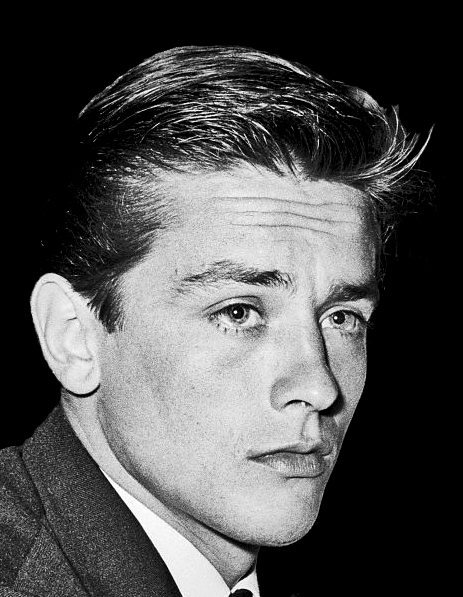
In the golden twilight of classic cinema, there exists a man whose beauty was both blessing and curse, whose very perfection seemed to mock the cruelty of time itself. Alain Delon – a name that still sends shivers down the spines of those who remember when movie stars were gods walking among mortals. But behind those legendary blue eyes that could pierce souls and melt hearts lay secrets that would define not just a career, but an entire era’s understanding of what it meant to be untouchable… and unreachable.
What happens when someone becomes too beautiful, too perfect, too much of everything the world desires? What price does a man pay when he becomes not just a star, but a living legend trapped in his own impossible image?
When Angels Descended to Earth
From the late 1950s, something extraordinary was happening in European cinema. A young Frenchman named Alain Fabien Maurice Marcel Delon was emerging from obscurity like a figure stepping out of a Renaissance painting. This wasn’t just another handsome actor trying his luck – this was the arrival of what critics would later call “a cultural and cinematic leading man of the 20th century.”
Picture it: the silver screen suddenly blazing with a presence so magnetic that audiences worldwide held their breath. In “Purple Noon,” “Rocco and His Brothers,” “The Leopard” – each performance was a masterclass in controlled intensity. Directors like Luchino Visconti, Jean-Luc Godard, and Michelangelo Antonioni – the titans of cinema – all wanted to capture that lightning in a bottle that was Delon’s presence.
By the late 1960s and throughout the 1980s, he had become more than an actor. He was an international sex symbol, a man whose face launched not just a thousand ships, but an entire generation’s dreams. From “Le Samouraï” to “Le Cercle Rouge,” from “La Piscine” to “Un flic,” Delon wasn’t just acting – he was creating a new archetype of masculine beauty and danger.
The Impossible Man: Icon Beyond Mortal Reach
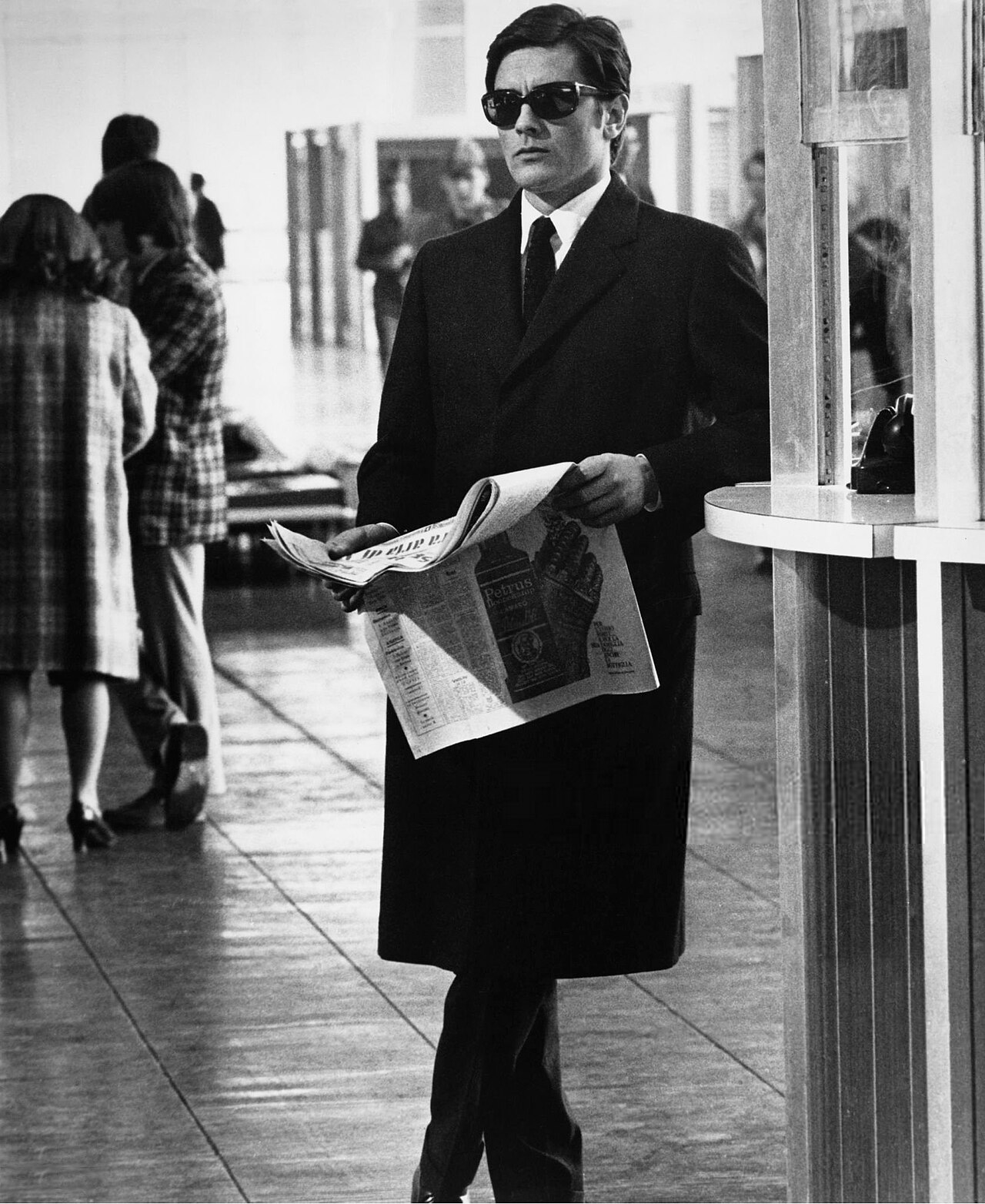
But who was Alain Delon, really? Beyond the camera’s loving gaze, beyond the carefully choreographed publicity shots, lived a man who had become something almost inhuman in his perfection. His style wasn’t just fashion – it was architecture. His looks weren’t just handsome – they were sculptural. His roles weren’t just performances – they were rituals of seduction that played out on screens around the world.
The accolades came like rain: the César Award for Best Actor in 1985 for “Notre histoire.” France itself claimed him when he became a member of the Legion of Honour in 1991. The Berlin International Film Festival crowned him with the Honorary Golden Bear. And in 2019, at Cannes – the cathedral of world cinema – he received the Honorary Palme d’Or, the ultimate recognition of a life lived in service to the art form he had helped define.
Yet there was always something untouchable about Delon. Even when he stepped away from pure acting to become a film producer, screenwriter, singer, and businessman, he remained somehow separate from ordinary human experience. When he recorded the spoken part in “Paroles, paroles” with Dalida in 1973, his voice carried the same mysterious magnetism that had made him a legend.
The Beautiful Burden: When Perfection Becomes Prison
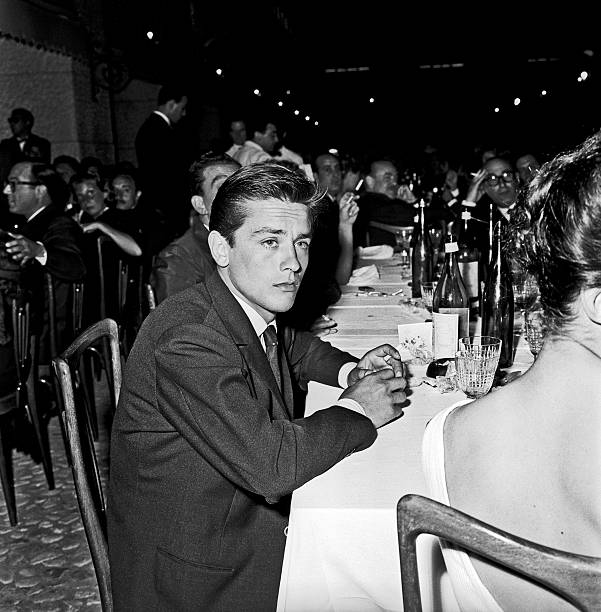
Here lies the twist that perhaps even Delon himself never fully understood: his greatest gift was also his greatest tragedy. In becoming the most well-known figure in French cinema, in achieving that rare status of international icon whose popularity seemed eternal, Alain Delon had crossed an invisible line from which there was no return.
Think about it – what happens to a man who becomes so synonymous with beauty, with desire, with the very essence of cinematic magnetism, that he can never again be simply human? Every role became a performance not just of character, but of “Alain Delon.” Every public appearance was a confirmation of a legend that grew larger with each passing year.
Even his decision to acquire Swiss citizenship in 1999 spoke to something deeper – a man seeking perhaps to find some corner of the world where he could exist without the weight of his own mythology pressing down upon him. But legends, once born, follow their creators everywhere.
The tragedy wasn’t in any single event or scandal – it was in the very nature of what he had become. Too beautiful for ordinary love, too perfect for genuine human connection, too legendary for simple happiness.
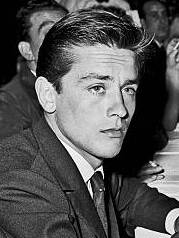
The Eternal Mystery: Beauty That Time Cannot Touch
Today, when we speak of Alain Delon, we speak of something that transcends the usual boundaries of celebrity or even stardom. We speak of a phenomenon that occurred when the right face, the right presence, and the right moment in cinema history aligned to create something that may never be seen again.
The mystery remains: What does it cost a man to become immortal while still breathing? What shadows live behind eyes that have been called the most beautiful in cinema? In our age of manufactured celebrities and Instagram perfection, Delon represents something both enviable and haunting – a reminder of when beauty was so rare, so genuine, that it could stop the world in its tracks.
Perhaps that’s the final secret of Alain Delon – not that he was too perfect for this world, but that this world was never quite perfect enough for him. And somewhere in that eternal gap between human desire and divine beauty lies the real story of the last of the legendary lovers, forever frozen in time, forever just beyond our reach.
The cameras stopped rolling long ago, but the mystery of Alain Delon continues to unfold, one haunting frame at a time.
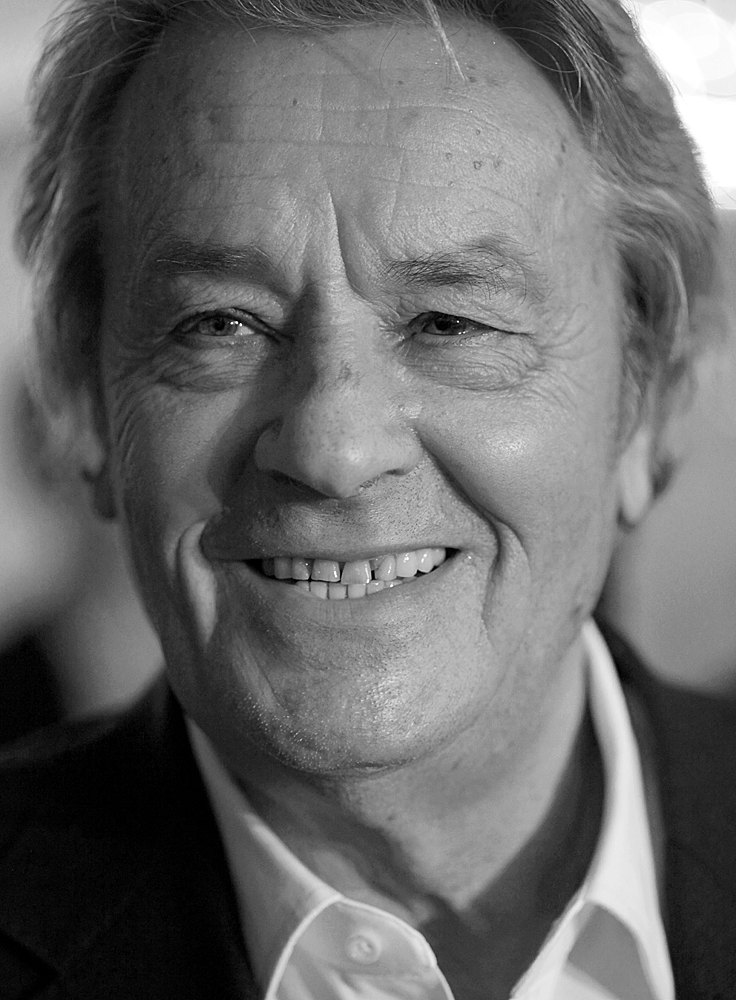
Photos via Wikimedia Commons (public domain / Creative Commons).