
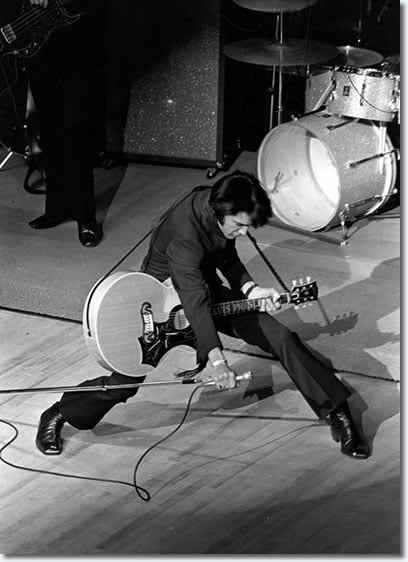

In the winter of 1969, the American music landscape was shifting beneath our feet. While the youth were lost in the psychedelic haze of Woodstock and the rising tide of protest rock, the King of Rock ‘n’ Roll seemed to be fading into the archives of the fifties. Elvis Presley was arguably at the lowest point of his artistic life, buried under a mountain of formulaic B-grade movies and pop soundtracks that failed to capture his true spirit. The world had moved on, or so the record executives thought. Yet, tucked away in an American Sound Studio, Elvis was about to do the impossible, breathing fire back into a career that everyone had written off as a relic of the Jukebox era.
He was handed a song that was raw, aching, and deeply personal—a narrative about the cyclical nature of poverty and the desperate longing for change. At first, Elvis Presley hesitated. The lyrics touched a nerve that hit too close to home, stirring memories of his own harsh, impoverished upbringing in Tupelo, Mississippi. For a man who had become a symbol of glitz and excess, the song demanded a vulnerability he hadn’t shown in years. He didn’t want to play the persona of the King; he wanted to be the man who remembered the dirt roads and the hunger. When he finally stepped up to the microphone, the air in the room reportedly went cold, then suddenly electric.
That single recording session became a turning point in music history. Elvis Presley delivered a vocal take that was stripped of the theatrical bravado and replaced with a gritty, soul-searching intensity that hadn’t been heard since his Sun Records days. It wasn’t just a comeback; it was a resurrection. By channeling his own trauma and suppressed history into those lyrics, he proved that his voice was not merely an instrument of entertainment, but a vessel for the collective struggles of a generation that grew up alongside him. The industry was stunned, and the public quickly realized that the King had reclaimed his throne with a newfound, matured gravitas.
Looking back at that era, it is easy to forget how fragile fame truly is. Elvis Presley navigated a cultural revolution that threatened to make him irrelevant, yet he survived by digging deeper into his own shadow. The song became a beacon for his fans, a bridge between the nostalgia of the fifties and the turbulent reality of the late sixties. It wasn’t about the glamour of the stage or the flashing lights of the media; it was about the raw human connection that only a voice like his could manifest. Even decades later, that recording serves as a powerful reminder of how art can pull a legend from the brink of obscurity.
Today, we look back at the 1969 session as a masterclass in artistic reinvention. It remains a haunting, beautiful testament to a man who, despite the weight of global fame, chose to look into his past to find his future. If you listen closely to the crackle of the vinyl, you can still hear the tremble of a man discovering his truth all over again. Elvis Presley wasn’t just singing; he was reclaiming his legacy, one honest note at a time. The next time you find yourself lost in the echoes of the past, remember that even the brightest stars have to walk through the dark to find their way back home.