
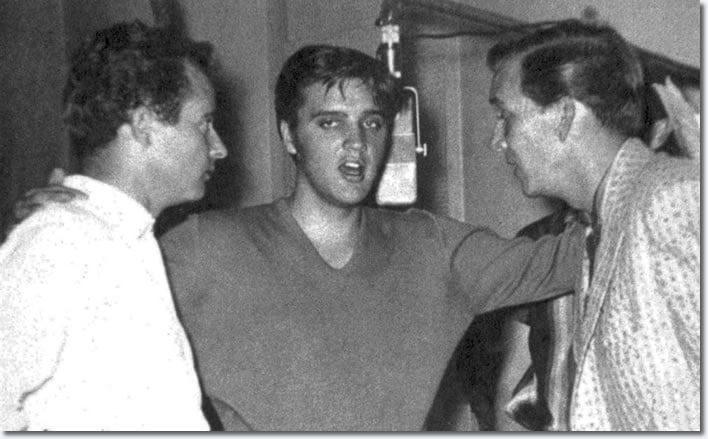

It was 1974, a year where the airwaves were still vibrating with the remnants of the Woodstock spirit, yet the music industry was hardening into a corporate machine. Elvis Presley, the undeniable King of Rock and Roll, was searching for a spark. His voice remained a force of nature, capable of turning any melody into pure gold, but his legendary career was beginning to feel the weight of exhaustion and the tightening grip of his infamous manager, Colonel Tom Parker. Behind the velvet curtains of Graceland, a seismic musical moment was brewing, only to be dismantled by the cold, calculating hand of greed.
Elvis had heard a song that stopped him in his tracks: I Will Always Love You. Dolly Parton had written the track as a poignant, soulful farewell to her longtime mentor and partner, Porter Wagoner. It was a masterpiece of raw vulnerability, a song that demanded the kind of emotional depth only a vocalist of the King’s caliber could truly anchor. Elvis was captivated. He wanted to make the song his own, a signature ballad that would undoubtedly have transcended the charts and defined the mid-seventies soft rock landscape, standing alongside his most enduring hits.
But the Colonel was never one to settle for simple success; he demanded total dominance. When Dolly Parton was approached by Elvis Presley’s camp, everything seemed aligned for a historic collaboration. However, there was a non-negotiable stipulation: the Colonel insisted that Parton sign over half of the publishing rights to the song. In the cutthroat music business of the seventies, this was a standard power move, but for Dolly, it was a bridge too far. She was a songwriter at heart, and her catalog was her legacy, her retirement, and her soul. She politely but firmly declined the demand, effectively slamming the door on the King.
Looking back from our modern era, this moment remains one of the most agonizing ‘what ifs’ in the history of American music. Imagine the iconic vibrato of Elvis Presley pouring over the lyrics of I Will Always Love You during one of his Las Vegas residency shows, perhaps broadcast on a crackling television set through an RCA speaker. It would have been a crowning achievement, a collision of country-soul and rock royalty that would have lingered in our collective memory like the neon lights of Studio 54. Instead, the song became a massive global phenomenon years later through Whitney Houston, cementing its status as an eternal classic.
This incident highlights the tragic reality of fame during that golden age of entertainment. While Elvis Presley was the face of musical revolution, his life was frequently dictated by the business interests of men who viewed art solely as a commodity. Dolly Parton’s refusal served as a rare act of rebellion in an industry where artists were often expected to bow to management’s demands. It is a cautionary tale about the cost of control and the preservation of an artist’s vision.
Today, when we hear those opening notes, we are transported back to a time of jukeboxes and analog dreams. The story of Elvis Presley and the song he never sang reminds us that even the greatest legends were bound by the chains of their own success. We are left only to wonder how the King might have interpreted such a tender goodbye, a performance that remains forever locked away in the archives of lost history.