
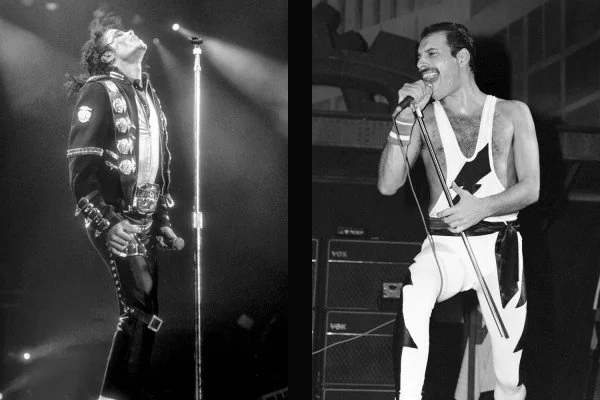

It was July 13, 1985. The sweltering heat of Wembley Stadium was matched only by the collective anticipation of a global audience spanning continents. Millions were glued to their television sets, waiting for something to happen. Then, Freddie Mercury walked out, sat at the piano, and struck the opening chords of Bohemian Rhapsody. In that singular moment, Queen did not just perform a set; they seized the soul of rock and roll and redefined what a stadium performance could truly achieve. It was a twenty-minute masterclass in charisma that remains the gold standard of live music history.
Leading up to that fateful afternoon, Queen was at a professional crossroads. Some critics had whispered that their reign was fading, suggesting that the band’s theatrical, flamboyant style was becoming a relic of a bygone era. The air in the music industry was shifting toward the neon-soaked synths of the mid-eighties, and the raw, arena-filling energy of the seventies felt like a fading memory. Yet, behind the scenes, there was a quiet determination. Brian May, Roger Taylor, John Deacon, and the incomparable Freddie Mercury knew they had one shot to prove that their legendary sound was timeless.
When they finally took the stage, the tension was palpable. The band didn’t just play; they commanded the space with a precision that bordered on the supernatural. Freddie Mercury, dressed in his iconic white tank top and blue jeans, turned the massive stadium into his personal living room. He didn’t just sing to the crowd; he pulled them into his orbit, his vocal prowess soaring over the roar of seventy-two thousand people. For those twenty minutes, the internal struggles and the grueling demands of the industry dissolved. It was just the four of them, united by a singular, electrifying purpose.
This performance at Live Aid did more than just boost record sales or cement their legacy; it saved the band’s reputation when it mattered most. The sheer force of their set—transitioning from the operatic complexity of their hits to the driving, anthemic power of Radio Ga Ga—proved that stadium rock was not a dying art form. It was a cultural touchstone that resonated with everyone watching, from those huddled around small screens in London to families gathered in living rooms across the United States. They didn’t need elaborate pyrotechnics or expensive stage tricks; they only needed the raw, unadulterated power of their music.
Decades later, the legend of Queen at Live Aid continues to captivate new generations of fans. It serves as a haunting reminder of an era when rock icons felt larger than life, yet profoundly human. Whenever those first piano notes hit the speakers, we are transported back to that summer day, reminded of a time when music had the power to stop the world. Even now, the magic of that performance remains undefeated, a testament to the fact that when four masters of their craft converge, they create something that echoes through time forever.