
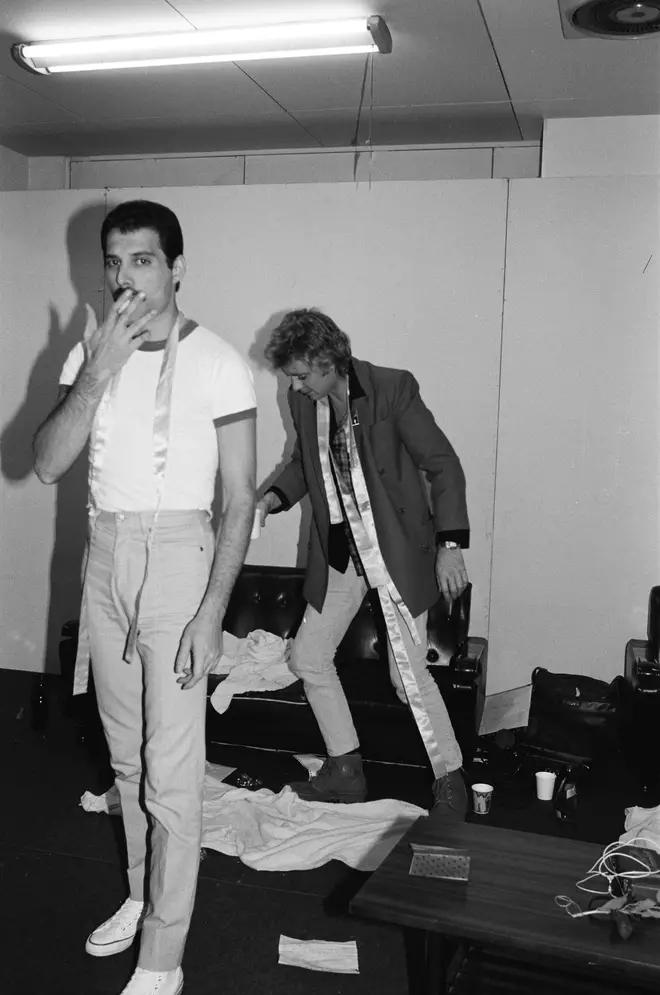

It was 1975, and the world of music was about to change forever. Inside the confines of a suffocating recording studio, a group of four men were attempting the impossible. Queen was not just recording a song; they were sculpting a sonic monument that would defy every convention of the era. The air in the booth was thick with the scent of tobacco and the nervous tension of a band on the brink of greatness. They were crafting Bohemian Rhapsody, a track that would eventually become the crown jewel of rock history, yet few knew how close the production came to physically destroying itself.
At the heart of this madness was the legendary operatic section, a dizzying whirlwind of vocal layers that sounded as if a choir of hundreds had descended into the studio. In reality, Freddie Mercury, Brian May, and Roger Taylor were locked in a cycle of relentless overdubbing. They pushed the limits of the analog technology available at the time. The 24-track tape they were using—a marvel of engineering back in the mid-seventies—was being pushed to its breaking point. They recorded, layered, and re-recorded until the magnetic oxide began to wear thin. The result was a chilling realization: the tape had been polished so many times that it literally became transparent to the light.
This was the dark side of perfectionism, the kind that defined the golden age of studio production before the sterility of digital recording took over. It was an era of cigarette-stained mixing consoles, the warm hiss of magnetic tape, and the raw ambition that powered bands like Queen through the late seventies. They were not just musicians; they were alchemists trying to turn sound into gold. The pressure was immense, yet the band stood their ground, fueled by a creative friction that would eventually make them global icons. They were operating in a world where the Jukebox was still king, yet Bohemian Rhapsody promised a future that sounded like nothing else.
What makes the story of Bohemian Rhapsody so hauntingly beautiful is the human cost of that art. The song was a gamble, a six-minute suite that defied the radio-friendly rules of the day. Executives were baffled by its operatic structure and its lack of a traditional chorus, yet the band refused to blink. When the song finally hit the airwaves, it captured the zeitgeist of the seventies perfectly. It resonated because it felt dangerous, theatrical, and deeply personal. It was the sound of a band pushing themselves into the light, even as the medium holding their masterpiece threatened to fall apart.
Decades later, Bohemian Rhapsody remains a monolith. Every time we hear that iconic harmony, we are listening to the echoes of a studio experiment that pushed physics to its limit. It serves as a reminder of an era where obsession was a virtue and every note was earned through sweat and trial. As we look back at the glory days of rock, Queen stands as a testament to what happens when you refuse to compromise. Next time you listen to those ethereal voices, remember the transparent tape and the four men who dared to dream in colors that weren’t meant to exist.